Congratulations on Discovering Your Dosha!

If you’ve taken the Poised For Bliss™ Dosha Quiz, you now have insight into your unique mind-body constitution—your dominant dosha. Understanding your dosha is just the first step.
The real magic happens when you apply this knowledge to your daily life. This guide will teach you:
How to recognize when your dosha is out of balance
Practical ways to restore harmony through food, movement, and lifestyle
How seasonal changes influence your dosha
How to track and adjust your practices for long-term balance
By the end, you’ll have a comprehensive toolkit to support your body, mind, and spirit—perfect whether you’re new to Ayurveda or looking for actionable steps.
Dosha Breakdown 🌿

Vata (Air + Space) 🌬️
Governs: Movement, communication, creativity, flexibility
Traits: Energetic, imaginative, adaptable
Imbalance signs: Anxiety, dry skin, irregular digestion, scattered thoughts

Pitta (Fire + Water) 🔥
Governs: Metabolism, focus, digestion, transformation
Traits: Determined, focused, decisive
Imbalance signs: Irritability, inflammation, overheating, skin issues

Kapha (Earth + Water) 🌱
Governs: Structure, endurance, immunity, stability
Traits: Grounded, patient, nurturing
Imbalance signs: Sluggishness, resistance to change, emotional heaviness
Pro Tip: Your dominant dosha is just the starting point—your constitution can shift with seasons, stress, diet, and lifestyle.
Recognizing Dosha Imbalances ⚖️
Even if you know your primary dosha, imbalances can appear based on your daily habits, environment, or seasonal changes.
Vata Imbalance Signs 🌬️
Dry skin or hair
Irregular digestion or constipation
Anxiety, restlessness, scattered thoughts
Sensitivity to cold
Irregular sleep patterns
Pitta Imbalance Signs 🔥
Irritability, anger, or impatience
Inflammation or digestive issues (heartburn, ulcers)
Excess heat in body or mind
Skin issues like rashes or acne
Strong cravings, impulsiveness
Kapha Imbalance Signs 🌱
Physical and mental sluggishness
Low motivation or fatigue
Weight gain or water retention
Congestion or slow metabolism
Resistance to change, procrastination
Observation Tip: Track your energy, mood, digestion, and sleep for 1–2 weeks to notice patterns.
Practical Ayurvedic Tools to Restore Balance 🌿
Ayurveda gives us practical, gentle ways to restore dosha balance. Think of your dosha as your unique rhythm—these practices help you align with it.
Vata-Balancing Practices 🌬️
Daily Tips:
Warm, cooked meals with healthy oils 🍲
Sweet, sour, and salty tastes
Consistent daily routines ⏰
Warm teas and hydration ☕
Gentle, grounding movement (yoga, walking, tai chi) 🧘🏽♀️
Regular rest and sleep 🛌
Lifestyle Practices:
Abhyanga (self-massage with warm oil) 🛀
Meditation and deep breathing exercises 🌬️
Avoid excessive cold, travel, or irregular schedules ❄️
Pitta-Balancing Practices 🔥
Daily Tips:
Cool, mild foods with bitter, sweet, and astringent tastes 🥒
Hydrating, high-water foods 💧
Avoid overly spicy, sour, or salty foods 🌶️
Moderate, non-competitive exercise 🏊♀️
Breathwork and meditation to calm the mind 🧘🏽♂️
Lifestyle Practices:
Limit overworking or excessive competition ⚖️
Spend time in nature and near water 🌊
Moderate daily routines for meals and sleep ⏳
Kapha-Balancing Practices 🌱
Daily Tips:
Light, warm, and spicy foods 🌶️
Avoid heavy, oily, or cold foods 🍦
Daily movement: brisk walks, cardio, dancing 💃
Use stimulating spices: ginger, black pepper, cinnamon ✨
Break monotony with creativity and novelty 🎨
Lifestyle Practices:
Wake up early, avoid oversleeping ⏰
Alternate routines to prevent stagnation 🔄
Incorporate social interaction and mental stimulation 🗣️
Seasonal Shifts and Dosha Awareness 🌞❄️
Your dosha isn’t fixed. External seasons influence internal balance:
Vata season (late fall → early winter): May increase anxiety, dryness, irregularity
Pitta season (late spring → summer): May increase irritability, inflammation, overdrive
Kapha season (late winter → early spring): May increase heaviness, sluggishness, resistance
Awareness of seasonal shifts allows you to adjust diet, movement, and lifestyle practices proactively.
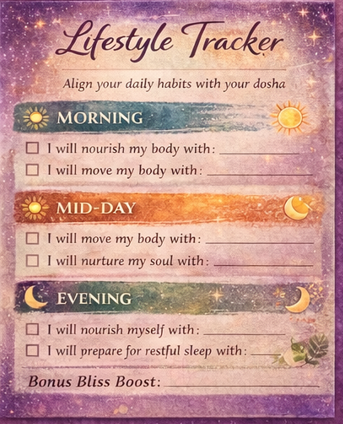
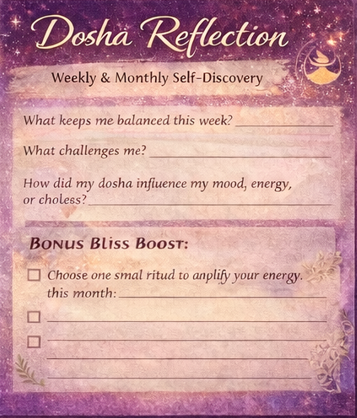
Tracking and Observing Your Dosha 📝
The best way to work with your dosha is observation:
Keep a journal of energy, mood, digestion, sleep, and cravings
Notice patterns during seasonal shifts or life changes
Adjust foods, movement, and routines accordingly
Celebrate periods of alignment—energy, clarity, and motivation
This is the core of Ayurveda: awareness + conscious action.
Putting It All Together: Your Dosha Toolkit 🧰
Observe your current state physically, mentally, and emotionally 👁️
Identify imbalance signs using your dosha profile ⚖️
Apply daily practices to restore harmony 🌿
Track results and adjust as needed 📝
Repeat consistently to maintain balance 🔄
This approach is gentle, personalized, and empowering—you’re aligning with your own constitution, not following a generic plan.
Next Steps and Resources ✨
Revisit your Poised For Bliss™ Dosha Quiz periodically, especially during seasonal changes, to track shifts in your balance
Use this blog as a reference for daily practices, movement, and lifestyle tweaks
For ongoing guidance and community support for women, explore the Royal Bliss Circle, where we teach how to integrate your dosha, seasonal rhythms, and daily rituals
By observing your dosha, recognizing imbalances, and applying supportive practices, you create clarity, vitality, and sustainable wellness. Your dosha season is your guide, your constitution is your map, and your daily practices are the tools to navigate your unique rhythm. 🌿💜
